

“One man's generalisation is another man's succinct yet profound summation of a complex theory or argument.”
― Stewart Stafford
The inclination people have of making broad, sweeping statements that then apply to everything within a specific domain show a fundamental lack of application and willingness to go deeper. Or may also be great conversation starters…
And such all-inclusive declarations tend to be made very often with respect to wine, which is among the most diverse, complex, multi-faceted experiences one could ever hope to have. Provided they’re real and untainted with pesticides, insecticides, fungicides, herbicides or any of the more than two hundred legal additives that can be used to correct the mistakes made in the vineyard.
And with that, I’m going to make a general statement, which is that conventional wines (made with the poisons mentioned above) need to be avoided completely.
It is not uncommon for people to say, “I don’t like white wine”. Or, “I don’t like red wine”. Or, “I don’t like natural wines”. While only having had a limited experience with any of these.
Until one has tried every single white, red, or natural wine, one really can’t make such a sweeping statement. Or one can, but it’s meaningless. And though it’s obvious that none of us will ever be able to taste every single white, red, orange, rosé, sweet, sparkling, fortified wine in the world, we can nonetheless remain open to the broadest possible diversity as long as we’re drinking / tasting ‘real’ wines.
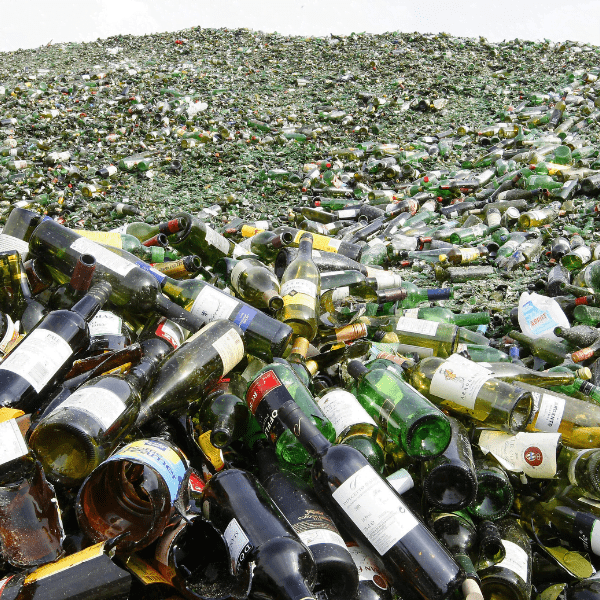
It would of course be better to say, I haven’t yet had a white (red, natural…) wine that I liked. Which is a very different thing from accusing all white (red, natural…) wines of being unappealing. Which isn’t to suggest one might still end up disliking any of these categories and sticking to what our brains (or our limited but very convinced palates) consider drinkable.
“ʺThey are all the same!ʺ Is the cruelest
gallows humankind ever built.” - On Stereotypes and Sweeping
Statements ― Lamine Pearlheart, To Life from the Shadows
People often say too that they can’t drink wine because of sulfites. Or that they don’t like this grape or that grape ("No, if anyone orders merlot, I'm leaving. I am NOT drinking any f****** merlot!" - famous quote from the film ‘Sideways’); or that red wine is healthier than white wine, or that the legs on a wine are somehow indicative of quality, or that AOC wines are always a badge of quality, or that Champagne is better than other sparkling wines, or that rosés are ‘feminine’, cheap, ‘beach wines’, or that Beaujolais is always light, fruity and ‘nouveau’ and so doesn’t age, or that Bordeaux (Burgundy) produces the best wines in France, or that red wines should be served at room temperature, or are best for accompanying cheese, or that… the list is kind of endless.
And yet, it’s quite understandable that with such incredible diversity and choice, and the sad but unavoidable admission that both time and money are limited, one might end up callously ostracising an entire wine segment and stick with what you already know. Is there no way around this conundrum?
Yes, and it all has to do with the producer. The single most important thing to know about wine is that every (real) bottle of wine is a work of art, and every good wine maker is an artist. And the corollary to that (totally justified generalisation) is that wine is made in the vineyard, and how vines are grown determines whether a wine is ‘alive’ or not. ‘Living wines from living vines’ is one of the tag lines of Paris Wine Walks. If vines are not cultivated organically (and this applies to agriculture in general) they will never have any real taste.
After the blind wine tastings that conclude the vineyard visits and Paris wine history of Paris Wine Walks, people often ask where they can buy the wines. As most of the wines we taste are very small production and so limited in their reach (limited to a relatively small geographic sphere), it’s usually difficult to find them anywhere other than where we are tasting.
So is there no joy to be found, or solution to be given that might allow people to expand their organoleptic experience, boldly going where their palates have never been before, and thus opening their minds to new discoveries and changing them from monochromatic tasters to enthusiastic explorers of wine’s myriad colours, nuances, and profound pleasures?
There is. But it won’t necessarily change you unless you’re open to change. And more importantly, also willing to explore, experiment, and venture outside of the known. Not once, or twice, but regularly and randomly. If there is method, then there is likely going to be expectation, pre-conceived ideas, and bias. Being open means being willing to taste whatever is offered , trusting your palate to guide you and keep you on track.
But then, only when the wines are organic, biodynamic, natural. This is the real key to joy in wine, but that generalisation must be tempered with the caveat that not all organic, biodynamic, or natural wines are good. They just won’t make you sick, give you a headache, or poison you.
Ultimately, the whole vast playing field of wine can be brought down to who is behind the cultivation, vinification, fermentation, cellaring, bottling of the wine. The producer—the artist—is where one’s focus must be. Knowing good producers isn’t an insurmountable task, but it does mean that one needs to take note of the producer’s name when a (real) wine strikes your fancy.
To end, I quote myself: “Manufactured taste, which has become increasingly common in wine making as vineyard soils succumb to the negative impacts of chemical treatments, producing insipid, poor quality grapes that lack vitality, uses various artifices to reconstitute what nature offers naturally. It comes as a surprise to most people that there are over 200 legal additives available to wine makers to ‘correct’ the mistakes made in the vineyard. Whereas ‘natural’ wines (what we used to call all wine before the intervention of chemical treatments) only require healthy, ripe grapes.
It is obvious therefore, that industrial methodologies, which are really about producing a ‘product’ rather than a true expression of terroir, are no different than the manufactured (artificial) tastes found in soft drinks and fast foods.”
And that is not a generalisation, but a fact. Santé!
Thank you for letting me into your world and for reading the Paris Wine Walks Substack. Your support is invaluable as are your comments, suggestions, critiques, dreams, thoughts and remembrances. A little encouragement goes a long way, so please consider a paid subscription, which need cost no more than (a cheap) glass of wine per week. Or, book a wine walk!
My book, ‘The Hidden Vineyards of Paris’ (reviewed in Jancis Robinson’s wine blog, the Wine Economist and National Geographic Traveler UK) is available at ‘The Red Wheelbarrow Bookshop’ at 11 rue de Medicis, 75006 Paris. If you haven’t yet discovered this gem of a bookshop, now’s your chance. Open every day!
Wine Walks!
For more information, click on the underlined links:
Sparkling Wine Splash!
Share a sparkling, convivial moment with colleagues, friends or clients to celebrate the moment or to simply gather for fun.
Clos Montmartre - Paris in Your Glass
Paris’ most famous wine producing vineyard
Latin Quarter Unbottled!
An insider’s journey to the oldest wine neighbourhood in the city
Belleville Unbottled!
A winebar crawl that features some of the best winebars in the city
Wine Your Way Through the Marais
The Marais seen through a wineglass
Saint-Germain-des-Prés
Discover the vinous spirit of medieval Paris
3-Vineyard Cycling Tour
A comprehensive overview of medieval Paris
Paris Bottled!
Short on time? This one’s for you.
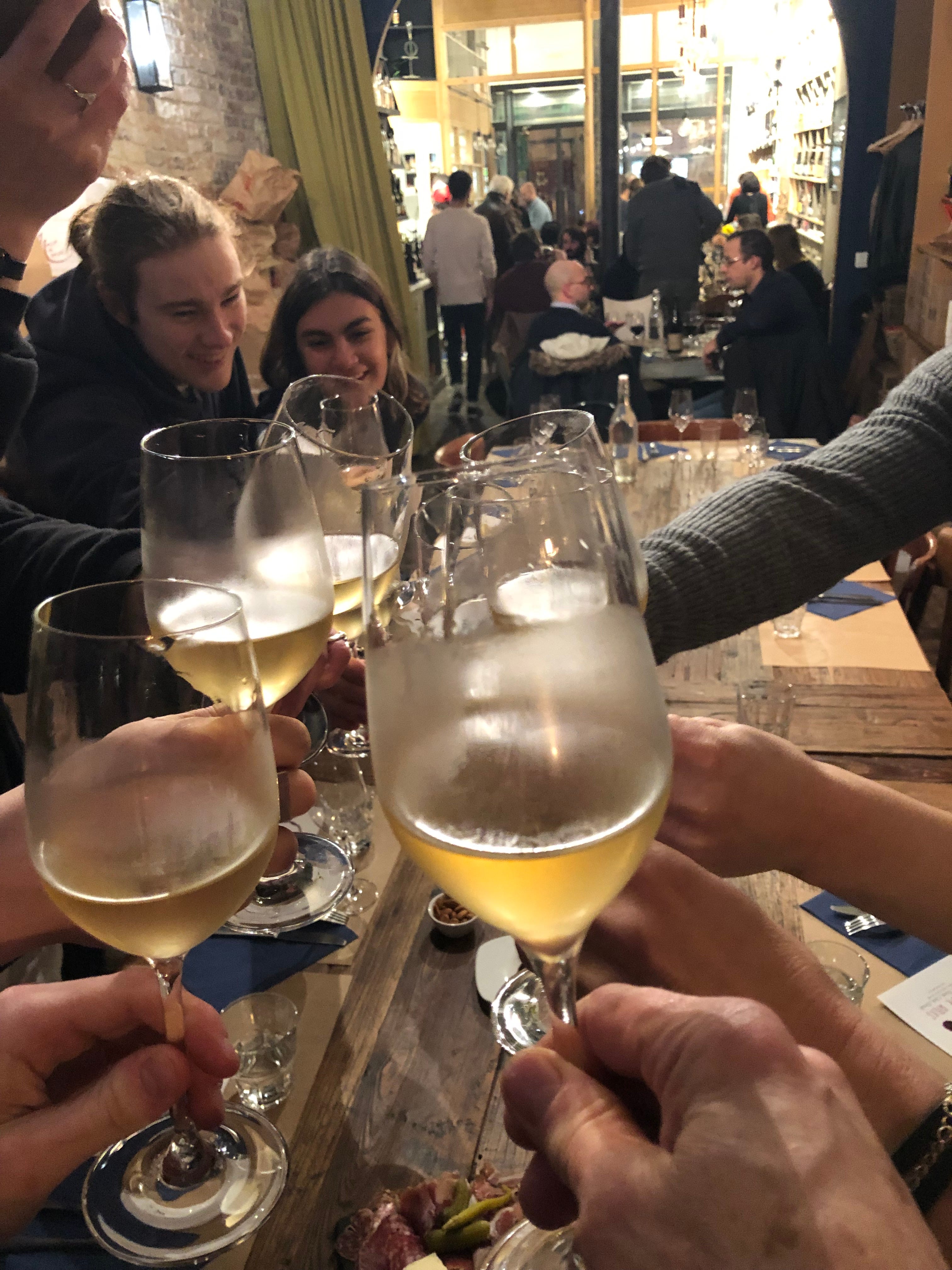
In Paris at the pop-up you graciously attended, we had one customer who told me explicitly not to serve her any biodynamic wines because they gave her headaches, she only wanted organic wines. Puzzled by this I asked her why she thinks the biodynamic wines gave her a headache and not the organic wines, and she didn't know. I then explained a bit about biodynamic and organic and after a bit more prying questions, she thought the biodynamic wines had less alcohol so she drank more of it. Suffice to say, she was simply hungover : )